TL;DR – This game has usurped my life, even when Harold killed me over and over again …. And over again.
Disclosure – I paid for this game.
Dune: Awakening Review –
Every now and again, a game captures me in a way that I cannot quite understand. It’s what I think about at work, what I ponder on the bus, and sometimes even what pops up in my dreams. Today I get to do a deep dive into one such game that has taken over my life in the last couple of weeks. For you see, the spice must flow.
So, to set the scene, we have entered the world of Dune, but not the world you might be familiar with. For this is one of Paul Atreides’ spice dreams, where he explores a world of what would have happened if his mother Lady Jessica had been loyal to the Bene Gesserit and had a daughter instead of a son, as they wanted. Thus, House Atreides was not wiped out in the Arrakis coup, and the planet has been thrust into a war between them and House Harkonnen. You play an off-worlder from one of several factions that have found themselves on a slave transport. Your life has minimal promise, that is, until a masked figure shoots down your transport and you find yourself out on the sands of Dune, not prepared for the world you are about to enter.

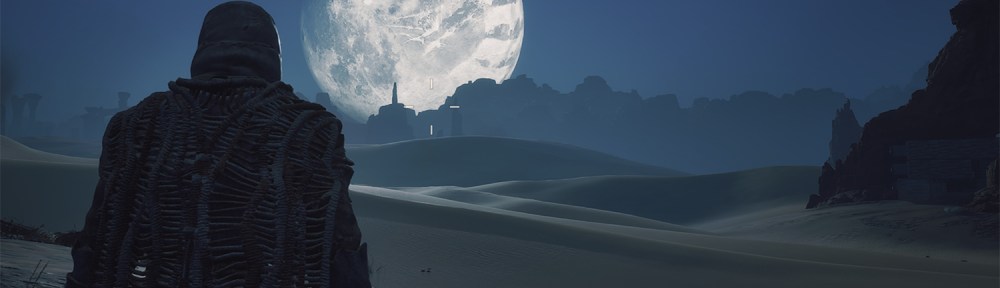
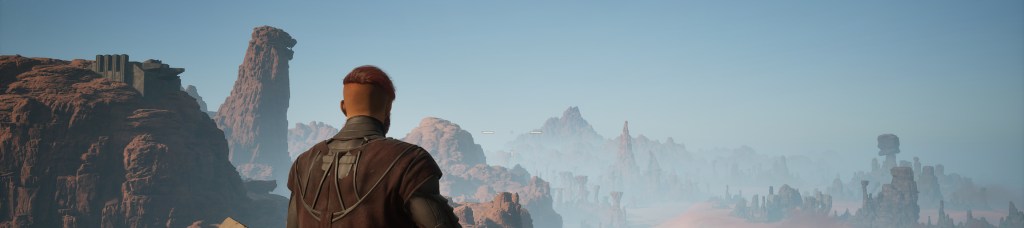
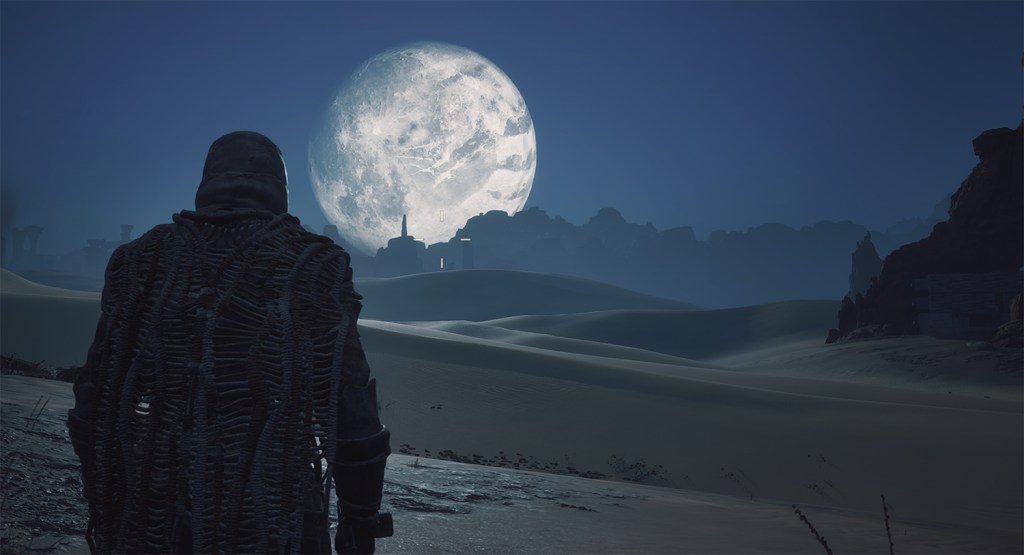
There is a lot to say about this game, but I want to start our proceedings with the visual aspects of this game, because this is one of the most beautiful games I have witnessed. There was a fear when I started that everything in the game would look samey, because it is all just desert. You can get away with that in a movie, but in a game that you are expected to put possibly hundreds of hours into, that is a big issue. But much like Mad Max: Fury Road, they wisely created a world where each zone of desert that you enter feels like both part of the same landscape but also its own area. You have the iron right red sands of the Vermillius Gap, the cool deeps of the Hagga Rift, the cactus grottos of The O’odham, and the quiet hell of Sheol, just to name a few.
This excellence in design extends to every part of the game as you explore the many camps, testing stations, and sietches in the game. Wisely, it looks like they have gotten the assist license for the visual style of the recent Dune films. The testing stations have that carved sandstone look, the Harkonnens are all bald, and the shields make a red crunch as the sword goes in. Not only is this a good idea because the art direction in those films is top notch, but Dune Part One won the production design Oscar for a reason. But it is a clever way of lowering the barriers of gameplay, because people are coming into this work with some prior understanding. I get that a shield turning from blue to red is a bad thing or good, depending on whether that is my shield or not. I get the need to watch my water or look out for wormsign without that needing to be reinforced by the game.
On the mention of wormsign, I must mention the worm in this game. Or as we like to call it: Harold. The critical thing to know about the worm is that if it gets you, you lose everything, and I mean everything. You lose what you were wearing, what was in your inventory, what you were riding, and what was in the inventory of what you are riding. You need that in the game, because that is what helps nail the risk/reward quotient in this game. Do you risk the longer and quicker trip across the desert, or do you take the longer route that is safer but will take forever as you hug the shield wall? Do you spend that little bit more time getting flour sand, or spice, or do you fly away to safety? One of my first real experiences with Harold was when a ship crashed right in front of my base, and I went out to look. I had a booster on my bike, and I thought I was fine, until Harold burst forth near me, and I panicked and did not get back on my bike in time and lost everything. You would think you would learn, but look at YouTube and you will see a plethora of people learning this the hard way. If nothing else, you learn quickly to look left, right, and left again before driving into sand.
This also helps the game feel like it is present in the world of Dune in a way that I have not seen many adaptations nail. From the moment I took my first steps onto the sand, I knew that I was on Arrakis Dune. The game is constantly reinforcing this with game mechanics that fit the setting. For example, this is the first game that has made me feel the presence of the sun. Stamina is so vital in combat or climbing or surviving that if you run out, or are even low in water, it is a significant problem. Especially at the start of the game when obtaining water is a lot harder. This leads to you hunting out shade wherever you go. Do I cross the sand now, or do I make the trip at night? Do I take a stillsuit to get me more water, or go with the armour? These choices, and more, feel natural in the game, and in the setting.
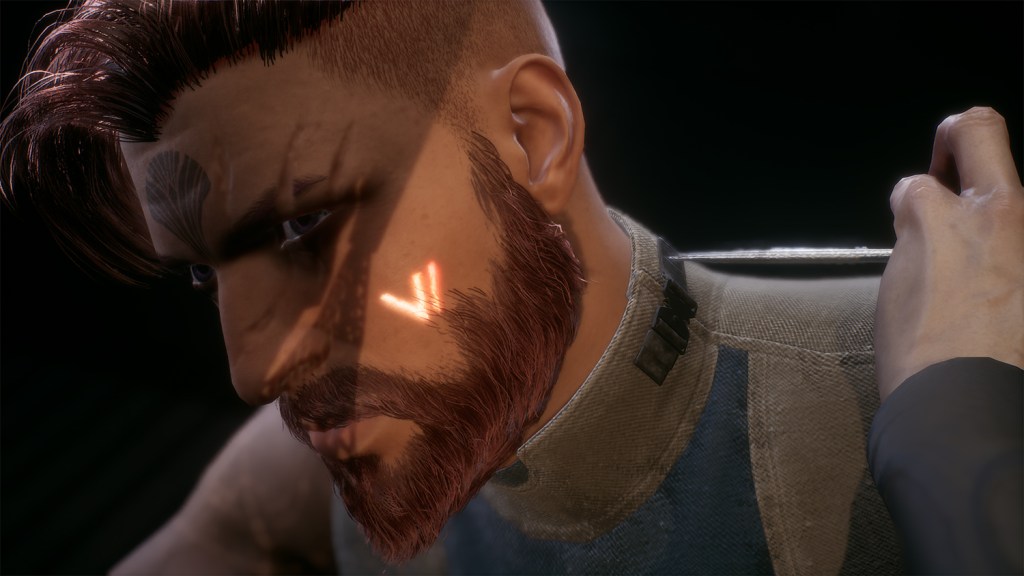
From a pure mechanical perspective, the shooting is not as tight as, say, a purpose-built FPS, but it still feels solid; the drillshots feel like they have the weight that they should have, for example. This is helped by some of the best foley work I have seen in a game for a long time. Every crack of a gun, every ricochet, every time your refiner whirls up, it all creates this tactile sense of the world. You also have the feeling of how all the vehicles work. They are a little floaty, but you kind of expect that on sand. But I can’t get across just how fun the ornithopters are. That moment when you get a perfect vulture and you cut across the world like a knife through wrapping paper. The stamina system is solid because you always know what is affecting it, and how much you have left. This is especially important when climbing, which errs more on the video game aspect of climbing. You don’t need to find climbing points, you just go up, until you run out of steam. The only issue I found is that it doesn’t deal well with climbing horizontally.
One thing that I was profoundly surprised about was just how deep a cut that the story takes. Right from the start, you are told that all the Fremen were wiped out during the war as the Padishah Emperor sent in his Sardaukar. So much of the game is set in the ruins of old Fremen settlements. The story is all about you discovering the journey of the Fremen and those elements that make them unique, the thumpers, the stillsuits, and, of course, the spice. The spice must flow. To explain these different elements of the Fremen culture, you go through a spice dream. It is here where they go into depth as to the story of the Zensunni Wanderers’ migration to Arrakis. That is such a deep cut that I am sure most book readers might not know about the details. It is here where you understand that the game makers profoundly understand the property that they are adapting, even when they are taking wild liberties with the story to make the setting work.
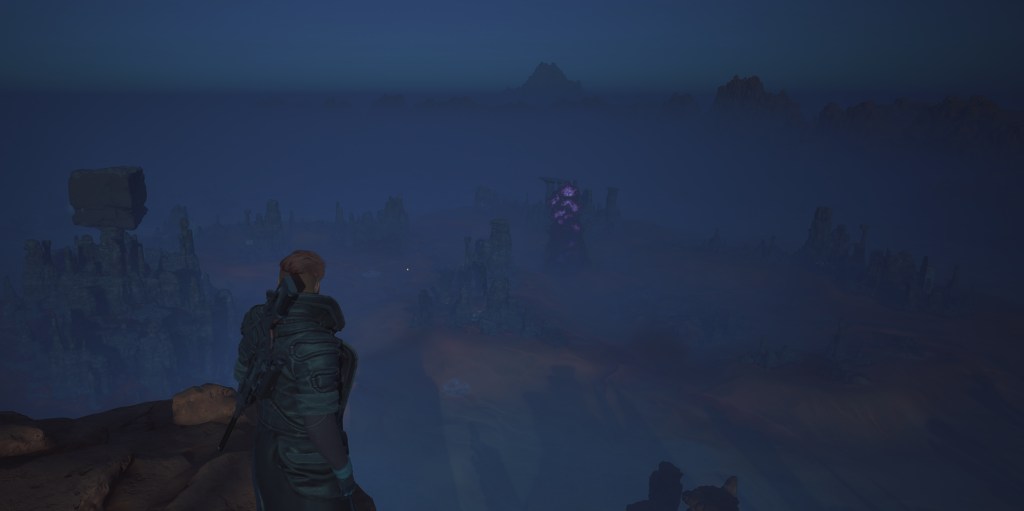
This is an MMO (Massively Multiplayer Online) game, so you need to take that into account when you play. For the most part, outside of the Deep Desert, you don’t have to worry about getting griefed by others, unless you get close to a crashed ship. However, in my entire time playing the game, I was never at a crashed ship at the same time as another player. Because it is based on a group experience, many of the dungeons are set up with a design that allows two or three people to take them down. You can do it solo, but it can be a slog at times. Indeed, much of the game is perfectly fine tackled solo, but I do think it is better with friends. Friends who can help you mine, or who have worked out the best route to get Aluminium, or who you can build a little community together.
While this game has usurped my life for the last couple of weeks, there are a couple of things that do hold it back from completely thriving. The first are the bugs. For me, I have only been hit by one major issue where I logged back in and found every part of my stillsuit had vanished, which made getting back home a real challenge. But I have had friends lose a lot more, like all their PSpice, when bringing it back before the Coriolis storm. I have not spent a lot of time in the Deep Desert. From talking to my friends who have, I know the developers still have a way to go to balance the PvP and PvE areas and the ability of griefers to undercut your day. It is also odd that the Scout Ornithopter is better at combat than the Assault Ornithopter. For me, the biggest weakness of the game comes from the transition between the starting area and the rest of the game. The opening is such a wonderfully cultivated experience, but it is not a good representation of what the rest of the game is like. So when you make that jump, there is almost some tonal whiplash as you have to reorientate yourself. Once you get through that barrier, it’s fine, but it is a point where I know people have dropped off. Oh, and if a dev happens to read this, can there be a way we can delete a staking unit without destroying the whole sub-fief?
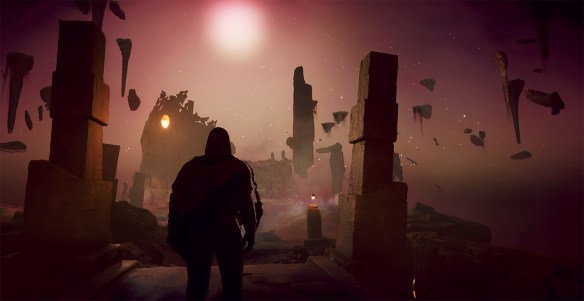
In the end, do we recommend Dune: Awakening? Yes, yes, we absolutely do. I have honestly had a blast playing this game. Exploring the testing stations, running away from the worms, pushing my luck and being reminded why that is a bad thing sometimes, and building a community with my friends. Even if it is wild how quickly you become okay with draining someone of all their blood to fuel your refinery. Sure, it still has some rough edges to smooth out, and I hope that happens soon, but a game like this has not captured me in such a way in an age. Have you played Dune: Awakening? Let us know what you thought in the comments below.
By Brian MacNamara: You can follow Brian on Twitter Here, when he’s not chatting about Movies and TV, he’ll be talking about International Relations, or the Solar System.
feel free to share this review on any of the social medias and you can follow us Here. Check out all our past reviews and articles Here, and have a happy day.
Credits – All images were created by the staff of Dune: Awakening
Creative Direction – Joel Bylos
Game Direction – Viljar Sommerbakk
Art Direction – Gavin Whelan, Jeffrey Hatton, Bruno Nunes, Morgan Sandbæk, David Mucci, Karl Mario Garibay Froede & David Levy
Technical Direction – Marcin Polaczyk, Fábio Reis, Jamie Adamson, Hugo Mardolcar, Mathieu Ruiz, Michael Søvik, Jørgen Havsberg Seland, Marcos Cavalheiro Pereira, Franck Vacher & Razvan Safta
World Direction – Jean-François Gagné & Matthew Woodward
Audio Direction – Arild Iversen
Writing – Léa Talbot, Petter Uhr Svenningsen Lee, Joshua Alan Doetsch & Wayde Zalken
Voice Acting – Daniel Bonjour, Tara Lynne Barr, Piotr Michael, Darin De Paul, Susanne Blakeslee, Vincent Rodriguez III, Ulka Simone Mohanty, Robin Atkin Downes, Mara Junot, Chopper Bernet, Jason Spisak, Todd Haberkorn, Tom Taylorson, Alexa Khan, Fryda Wolff, Jeffery Combs, Adam Croasdell, Isabella Hofman, Valerie Spencer, Matthew Waterson, Brandon Keener, Dave B. Mitchell & Rachel Rosenbloom
Music – Frank Klepacki, Stéphane Picq & Philippe Ulrich
Developer – Funcom
Publisher – Funcom
 TL;DR Movie Reviews and Analysis