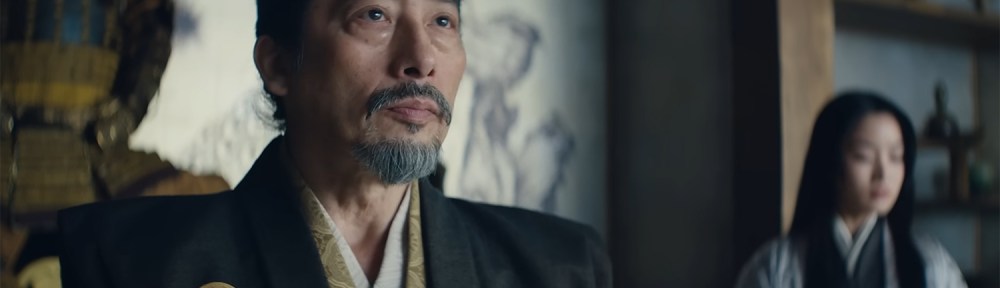
TL;DR – This is a polarising show in that it will either suck you into its world or create barriers that make it hard to be connected. I was the first, but I could understand why you could be the latter.
Disclosure – I paid for the Disney+ service that viewed this series.
Warning – Contains scenes that may cause distress.
Shōgun Review –
When you hear that an American studio is going to take on a Japanese story, that raises some alarm bells, but then it is a story about Japan written by an Australian in the 1970s. Well, you take a moment to have a grave concern. However, the more I heard about the series and the role of Japanese creatives like lead Hiroyuki Sanada, the more I had to check out, and I am glad that I did.
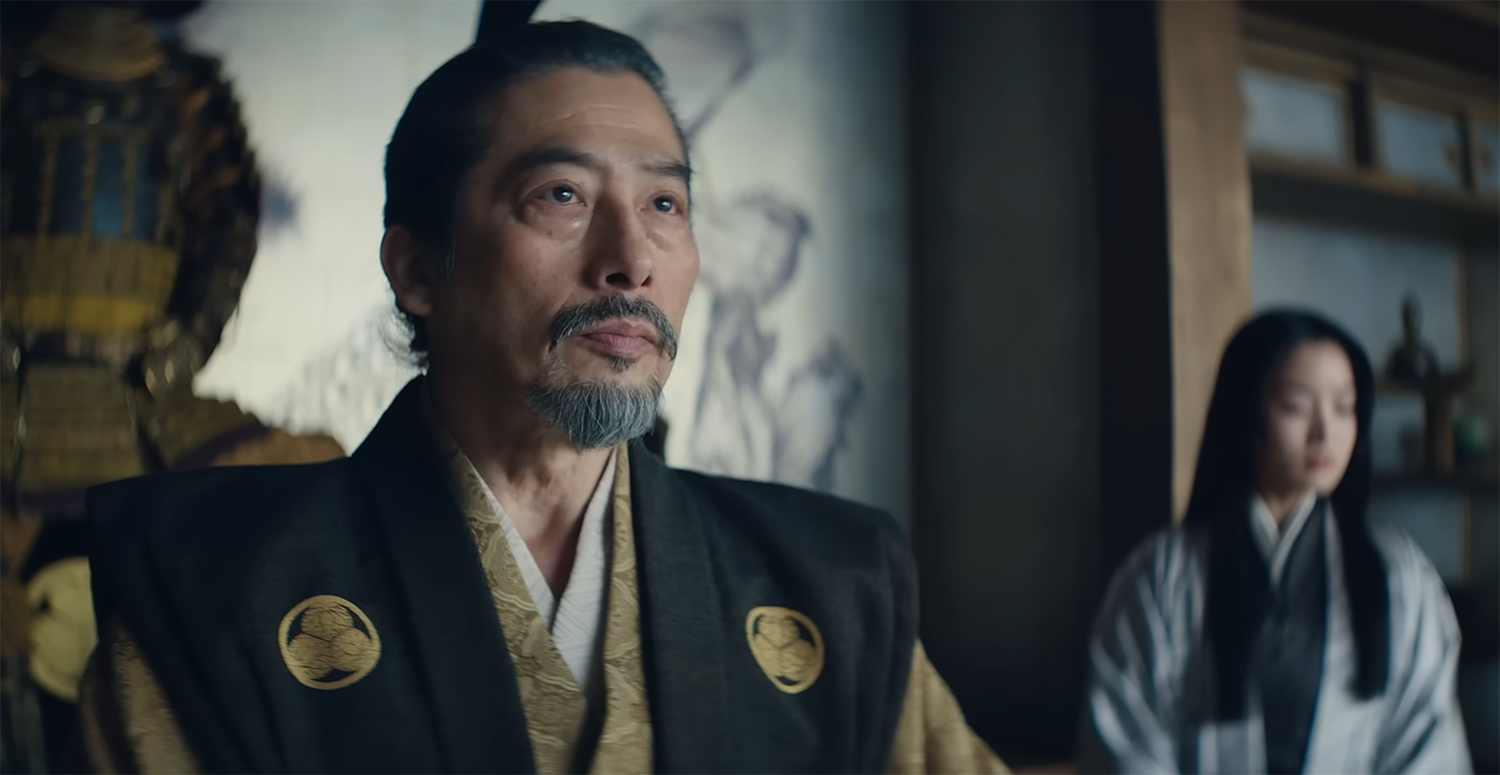
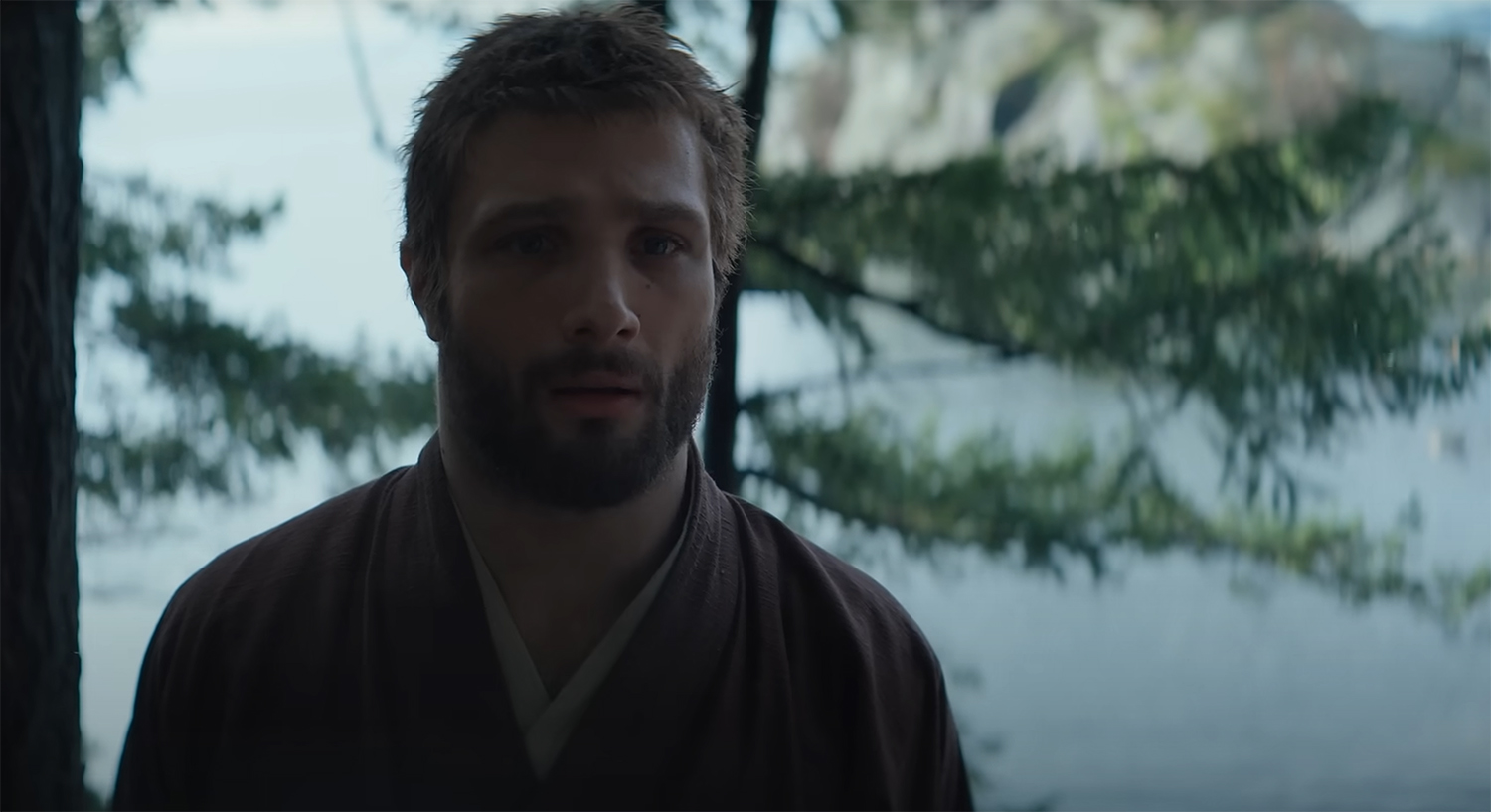
So, to set the scene, it is the year 1600, and only Portugal has been able to make inroads into the closed society of Japan. But there is a change in the air, with the reigning Taikō dying and not clear succession. This is an opportunity for both those within and those without to change up the status quo. But in all times of change comes chances for great riches and terrible defeats. One such entrant into this Dutch merchant led by Englishman navigator John Blackthorne (Cosmo Jarvis), whose convoy was hit with storms, starvation, dehydration, and despair when it crashed into the Japanese coastline, with only one ship of five remaining. But Blackthorne arrived in the Japans at an exciting time. For there is a power vacuum, and many people are trying to fill it, one of which is Lord Yoshii Toranaga (Hiroyuki Sanada), the local bushō and lord over Kantō. Blackthorne cannot speak a word of Japanese, but he is fluent in Portuguese. This is good because Lord Toranaga has a Portuguese speaker in his entourage, Lady Toda Mariko (Anna Sawai). The bad news is that the Portuguese are Blackthorne’s enemies. In religion, in regional competition, and can control if Blackthorne lives or dies. Now, from here, we will be looking at the season as a whole, so there will be some [SPOILERS] ahead.
Shōgun was a profoundly fascinating series because discussing it with people there were two different experiences. There were those, like me, who were utterly engrossed in every moment on screen, and then there were some who bounced entirely off the show. Looking at it, I can completely understand both groups. Clearly, I was captivated by the show and the narrative that they built up over the season. However, there are parts of this series, especially at the start when they are struck in a fishing village for a large part of the season. When a series gets into a moody period, the question is, do you connect with their vibe? For me, the answer was yes. But if you are not familiar with this world, I can see how that could be a hard sell.
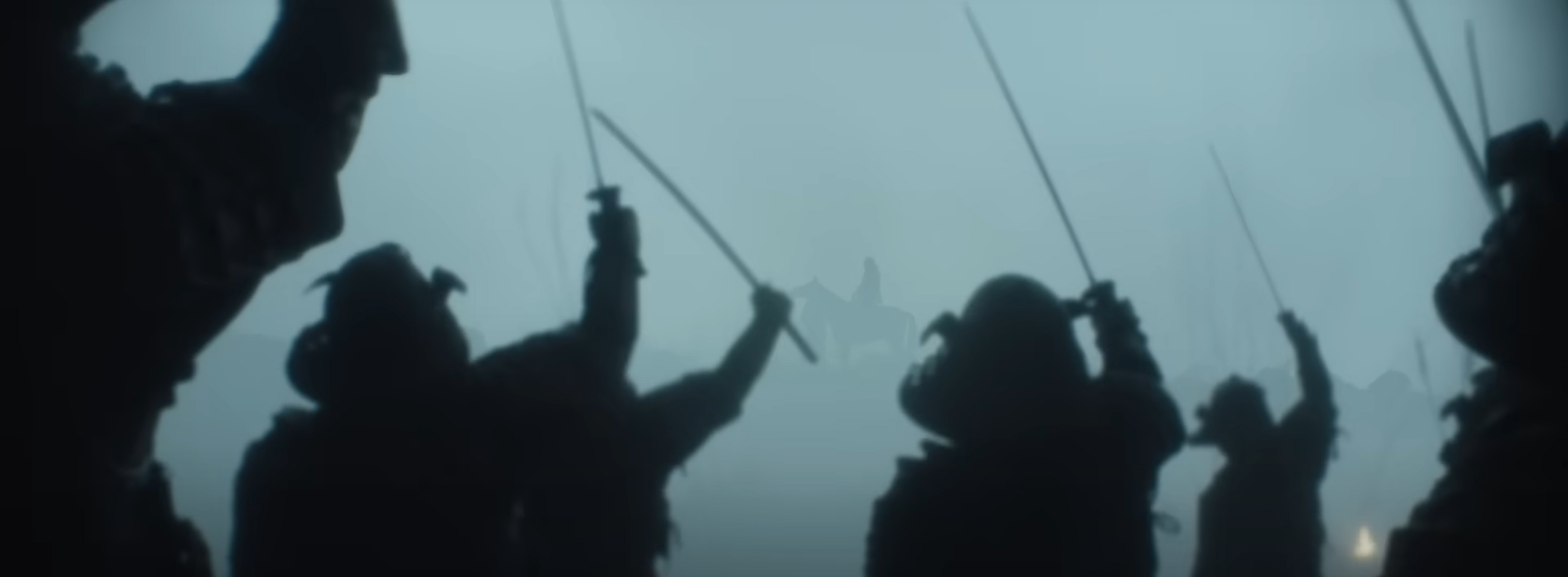
One of the biggest strengths of the series is its production, in terms of how much they did on a TV budget. Sure, there were a lot of digital crowds and set extensions going on, and there was a lot of action in that one specific forest between Osaka and its port. However, it is the details where things genuinely shine. It is the details in the tatami mats, the fabrics, the buildings, and everything else. Its action scenes, while fewer than I think people were thinking, were well constructed and provided these bursts of blood that hit with a shock. While it was clearly filmed on the Canadian coast, those details help ground the narrative. If nothing else, this might be one of the best representations of earthquakes that I have seen on screen.
The next strength of the series is the power of the Japanese actors, who brought not only their immeasurable skill but also their knowledge and experience. Hiroyuki Sanada is not just here as an actor but also as a producer, bringing his understanding of classical Japanese theatre and language and bringing the authenticity that a show like this desperately needs. One of these choices is the fact that they chose to keep everyone speaking Japanese rather than shifting to English after a sentence or two. Okay, they do that with the Portuguese, but if you are going to concede American audiences, that is the place to do it.
On that front, let’s talk about that acting because I think that is what is going to hook you into this show. The Sengoku period of Japan is very different from many societies today, even Japan. So, to connect with people and help guide them through some of the more challenging aspects of the show, you need to have a human connection, and that is found in the performances. We have already mentioned Hiroyuki Sanada, and we need to mention him again because his presence is the throughline that makes the season work. Anna Sawai is the highlight of the season, and it is clear how she has been underused before now because the complex emotions that she was able to reach were phenomenal. Then, of course, we have Cosmo Jarvis, who could have just been the dumb white boy, or the stuck-up white boy, or you know, British. However, there is stubborn humanity in his performance.
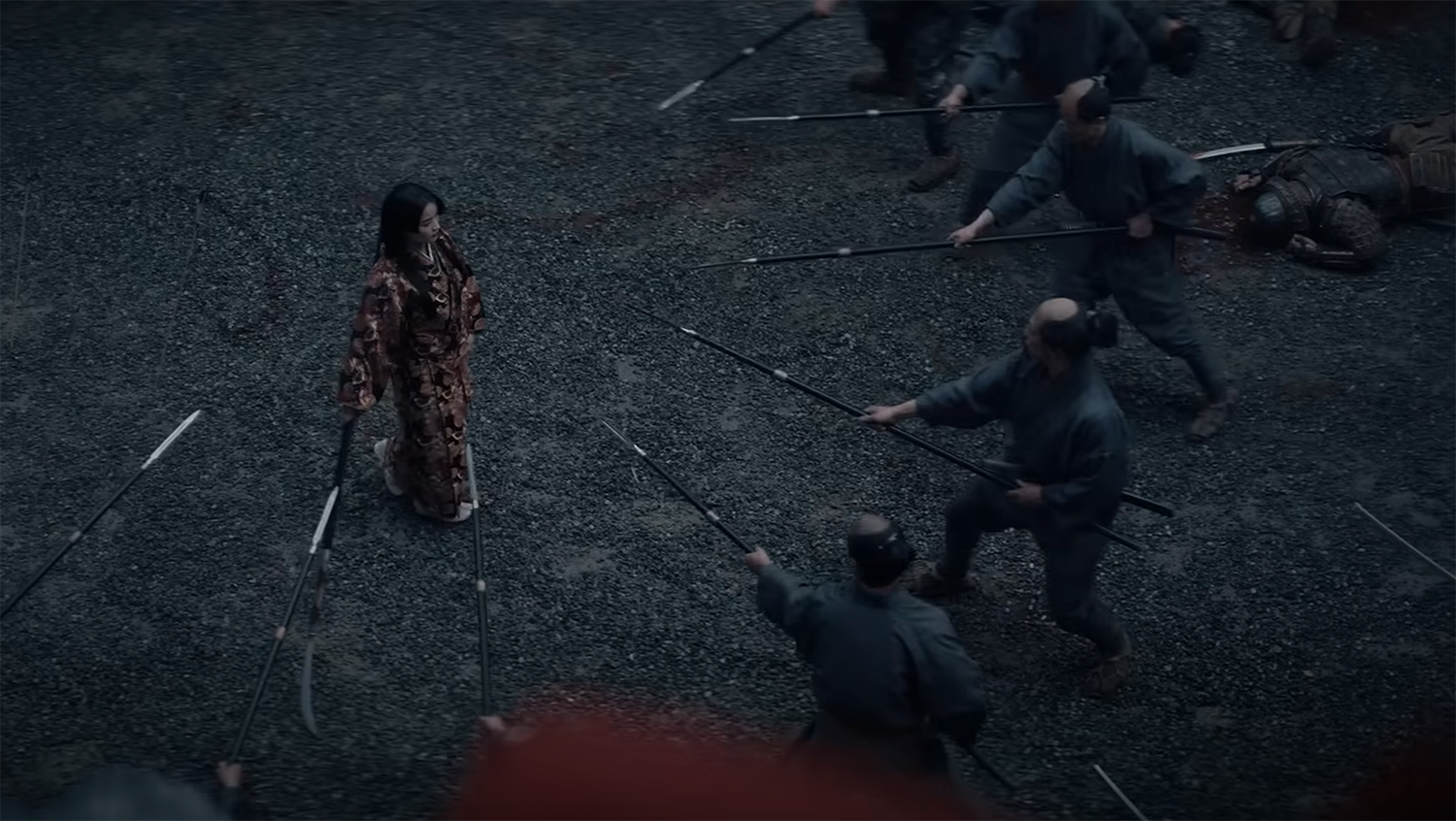
The narrative has all of the strength of being based on an actual event while not being beholden to it. The series gets all of the broad strokes right, including why the fight was happening and the greater geopolitical issues occurring at the same time. The old and new guard, the shifts of power in a vacuum, Europe’s conflicts showing up on the shores, and the rise of religion. These are very complex issues, and they are handled with the respect they deserve. The fact that the real people behind the characters John Blackthorne and Toda Mariko never met in real life would have been a problem if this was a direct adaptation. However, it does not matter that they have taken liberties because they still respect the motivations of their real-life counterparts, and the actors make it work.
I do understand those who bounced off this series in the middle because, after the escape from Osaka, there is a lot of standing around and not a whole lot else. This also happens on the defeat march to Tokyo. However, I liked these sections the most because it was where we got some of the best character work. John Blackthorne constantly blunders around as if he knows best, only to realise, slowly, what is actually important to him. The romance that can never be, the scheming lord trying to balance his obligations to his lord and surviving the coming avalanche, the old friend willing to give it all to their lord, and even the priest trying to expand the word of God. It is these stories that made the build-up to Mariko’s ritual suicide so impactful.
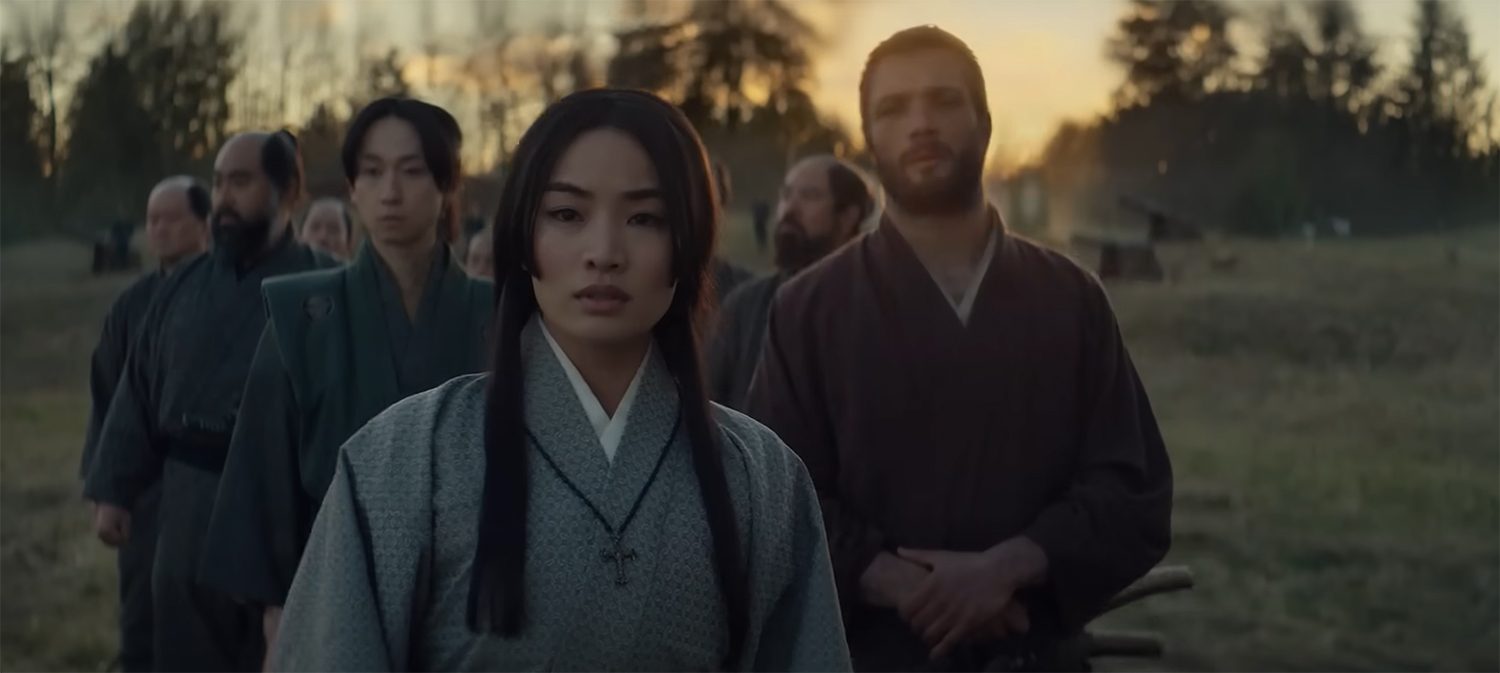
In the end, do we recommend Shōgun? Yes, yes, we do. Now, I am sure that this won’t be a series for everyone. It is more contemplative than action-oriented, for example. However, it completely captured me in this world and its story, and I am absolutely fine with it if they keep it going past the source material.
By Brian MacNamara: You can follow Brian on Twitter Here, when he’s not chatting about Movies and TV, he’ll be talking about International Relations, or the Solar System.
Have you seen Shōgun yet ?, let us know what you thought in the comments below, feel free to share this review on any of the social medias and you can follow us Here. Check out all our past reviews and articles Here, and have a happy day.
Credits – All images were created by the cast, crew, and production companies of Shōgun
Directed by – Jonathan van Tulleken, Charlotte Brändström, Frederick E.O. Toye, Takeshi Fukunaga, Emmanuel Osei-Kuffour & Hiromi Kamata
Written by – Rachel Kondo, Justin Marks, Shannon Goss, Nigel Williams, Emily Yoshida, Matt Lambert, Maegan Houang & Caillin Puente
Created by – Rachel Kondo & Justin Marks
Based On – Shōgun by James Clavell
Production/Distribution Companies – FX, Hulu & Disney+
Starring – Hiroyuki Sanada, Cosmo Jarvis, Anna Sawai, Tadanobu Asano, Takehiro Hira, Tommy Bastow & Fumi Nikaido with Nestor Carbonell, Tokuma Nishioka, Eisuke Sasai, Jaoquim de Almeida, Hiroto Kanai, Yukijiro Hotaru, Yoko Miyamoto, Shinnosuke Abe, Yasunari Takeshima, Moeka Hoshi, Ako, Yuki Kura, Louis Ferreira, Paulino Nunes, Ned Dennehy, Hiromoto Ida, Toshi Toda, Takeshi Kurokawa, Yoriko Dōguchi, Yuki Takao, Yutaka Takeuchi, Eijiro Ozaki, Yuka Kouri, Eita Okuno, Takaaki Hirakawa, Yoshi Amao, Haruka Igarashi & Hitoshi Masaki and Hiro Kanagawa, Sen Mars, Paul Moniz de Sa, Jarad Ager-Foster, Dakota Daulby, Seiji Fukumura, Manami Hara, Yoyai Hirano, Emi Kamato, Akiko Kobayashi, Nelson Leis, Brandon Soki Nomura, Nobuya Shimamoto, Mako Fujimoto, Yuki Kedoin, Yuua Yamanaka, Erisa Ichikawa, Nobuyuki Obikane, Emi Kamito, Yukari Komatsu, Sora Miyamotto, Junichi Tajiri, Mila Miyagawa, Mana Nakamura, Hinano Kuzukawa, Ayumi Morita, Kazuma Tatsumi, Kai Coulter, Kristopher Hori, Takahiro Inoue, Sho Oyamada, Kenji Sato, Ryuta Kato, Yuki Morita, Haruno Niiyama, Azriel Dalman & John JJ Miller
Episodes Covered – Anjin, Servants of Two Masters, Tomorrow is Tomorrow, The Eightfold Fence, Broken to the Fist, Ladies of the Willow World, A Stick of Time, That Abyss of Life, Crimson Sky & A Dream of a Dream
Episodes Covered – 安針, 二人の主君に仕えて, 明日は明日, 八重垣, 父の怒り,うたかたの女たち, 線香一本の時, 奈落の底, 紅天 & 夢の中の夢
 TL;DR Movie Reviews and Analysis
Pingback: Explosions, Guns, and Punches, Oh My. The Best Action of 2024 | TL;DR Movie Reviews and Analysis
Pingback: The Works of 2024 That Emotionally Wrecked Us | TL;DR Movie Reviews and Analysis
Pingback: Tension That Kept You On The Edge Of Your Seat In 2024! | TL;DR Movie Reviews and Analysis
Pingback: The Costumes of 2024 That Made Us Say ‘Hot Damn’ | TL;DR Movie Reviews and Analysis
Pingback: Cinematography That Made You Go Wow in 2024! | TL;DR Movie Reviews and Analysis
Pingback: The Musical Scores of 2024 That Wowed Us | TL;DR Movie Reviews and Analysis
Pingback: Awards – My Top 15 TV Shows of 2024 | TL;DR Movie Reviews and Analysis