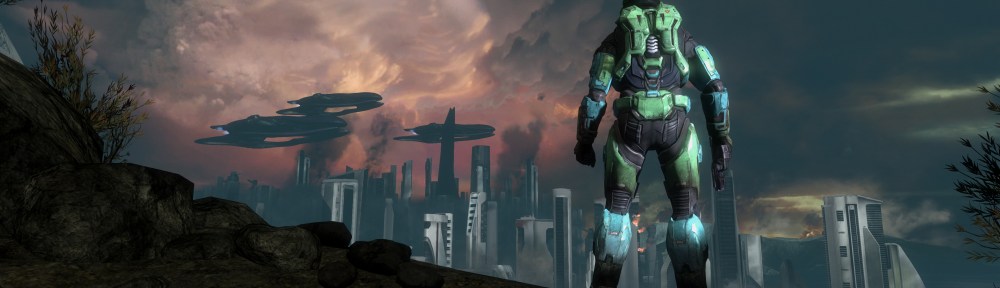
TL;DR – It might be the first Halo game to connect with me on a narrative level, as well as the general gameplay.
Disclosure – I paid for the Game Pass service that accessed this game.

Back late last year the Halo TV series hit its stride for a moment during the conflagration on the Planet Reach. Alas, the strength in the show was fleeting, but it had me wondering if that strength was based on anything. It was here that my friends introduced me to Halo: Reach, and ever since then, I have had a plan to check it out. Well, I was able to jump in with some friends, and it is time to see just how well a game from 14 years ago resonates with me today.
So, to set the scene, there has been a long war brewing between the Human forces of the UNSC and the growing alien Covenant threat. There had been numerous skirmishes, and all of humanity was working on a way to combat the Covenant’s technological edge because, sooner or later, they were going to find something meaningful. Well, when the Visegrád Relay Communications Outpost loses transmission, Colonel Urban Holland (Pat Duke) sends in Noble Team led by Carter-A259 (Freddy Bosche) to investigate. Noble Six (Amanda Philipson/ Philip Anthony-Rodriguez) discovered that it is not just a communication fault; the Covenant discovered Reach, which means an invasion is imminent. If Reach is about to fall, then they need to get to Sword Base because there could be one thing that saves humanity.

This game is a bit of an odd duck in the Halo franchise because it has a lot of the issues that you would come to expect with a prequel. However, this was also the final game that Bungie worked on directly before they left Microsoft. I am not sure if that odd intersection is what makes the game fascinating. However, from a narrative perspective, I think this is the first Halo game that has truly connected with me. The other games are fine, but they are known more for their presentation and gameplay than their narratives. We still get those vital elements here. However, there is a bit more care with the characters and the worldbuilding that goes beyond the core Master Chief (Steve Downes)/Cortana (Jen Taylor) dynamic that dominates the rest of the franchise.
Part of this came from the game designers completely understanding their scenario and what that meant. As you are no longer playing Master Chief, you needed to counter that with something as compelling. Here you are with a squad whose dynamics get built up throughout the game, and you really feel the loss when they inevitably sacrifice themselves to save lives. Some of the deaths are very clearly telegraphed, with people almost drawing targets on themselves. Yet others still caught me completely off-guard, and that impact hurt. If you have watched Rogue One, then I think you will understand the vibe that they nail here.
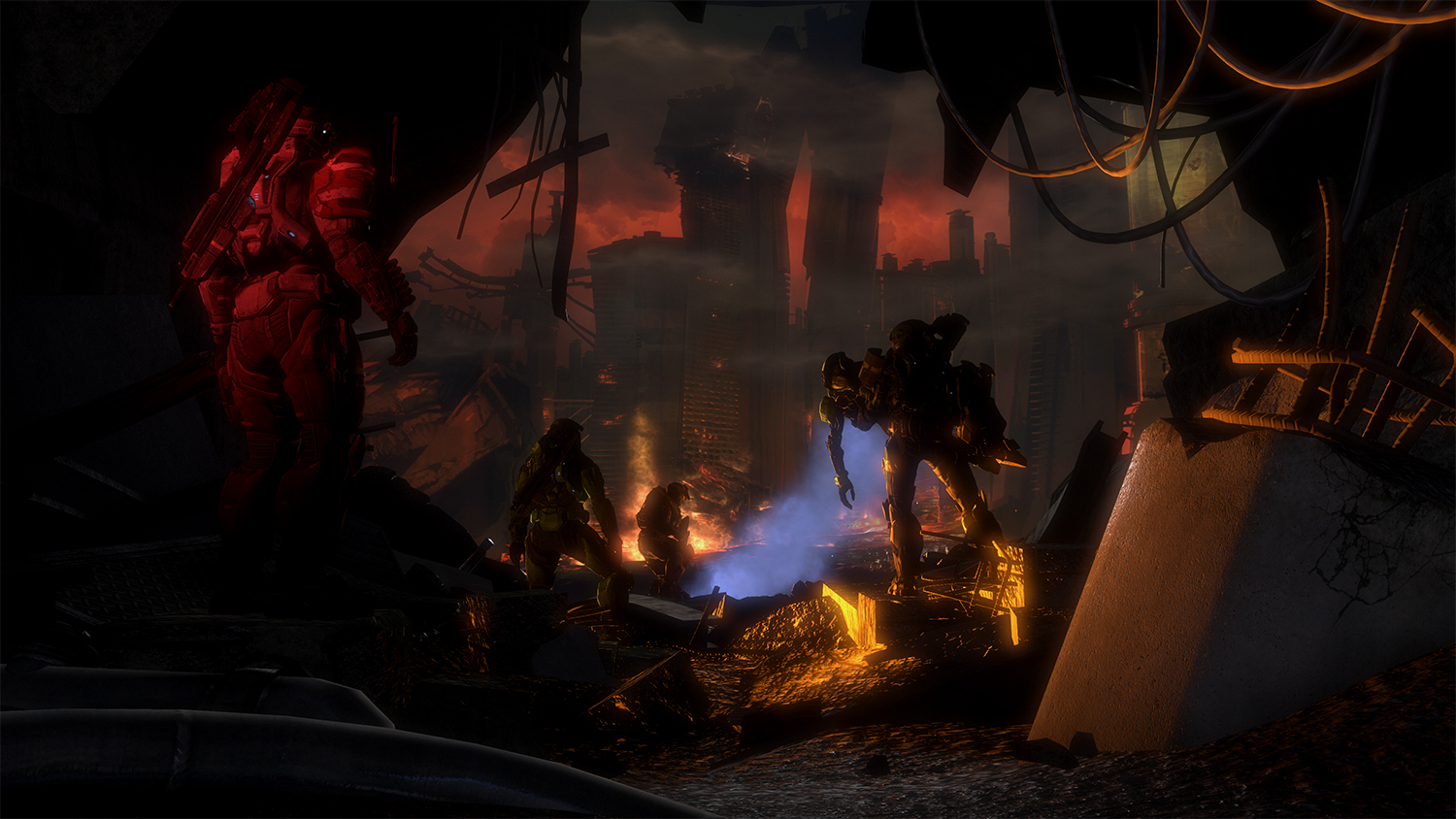
Halo: Reach supports that narrative push with an excellent progression in the levels that keeps mixing it up, so the game always feels fresh. At the start, we had missions on small, enclosed bases and big, wide vehicle chases in which someone was running the machine gun until it overheated. But then we see giant battles play out, run through cities ablaze trying to evacuate people, and even out into space to attack the heart of the enemy. These shifts not only help the game keep the engagement of their audience by not stagnating. These different scenarios also help reinforce the narrative because they feel connected to what would have really happened if this scenario had occurred. All of these prepare you in advance for that ending.
From a gameplay perspective, I played this on the Master Chief Collection, so I am sure there have been some quality-of-life updates that have helped it out over the years. I would say that the visuals were stunning. Some of those vistas took my breath away. I liked the character design of all the enemies that we faced. Except for the flying ones, they can go to hell. The gunplay was solid, and I found a better variety of weapons that worked for me than in the later Halo Infinite. While it was a fun ride, here were these little touches where you could see it show its age. All of the interactions in the game take a little bit longer to activate, and I was constantly having to repeat picking up a gun because I didn’t hold the button long enough. Also, there were times when that brown/grey colour palate from the 2010s shooters became a bit too prevalent.

In the end, do we recommend Halo: Reach? Well, if you can get a couple of friends together and can put an evening aside, I would say absolutely give it a go. It had a narrative strength that games like these needs. Also, most of the gameplay still holds up, and if nothing else, it earns its finale.
By Brian MacNamara: You can follow Brian on Twitter Here, when he’s not chatting about Movies and TV, he’ll be talking about International Relations, or the Solar System.
Have you played Halo: Reach?, let us know what you thought in the comments below, feel free to share this review on any of the social medias and you can follow us Here. Check out all our past reviews and articles Here, and have a happy day.
Credits – All images were created by the staff of Halo: Reach
Game Direction – Marcus Lehto
Story – Joseph Staten & Peter O’Brien
Lead Game Designer – Chris Opdahl & Chris Carney
Lead Animator – Roberta Browne
Lead Programmer – Ben Wallace
Story and Cinematic Lead – Lee Wilson
Voice Acting – Phillip Anthony Rodriguez, Amanda Phillipson, Freddy Bosche, Alona Tal, Jamie Hector, Hakeem Kae Kazin, Sunil Malhotra, Jen Taylor, Pat Duke, Carole Ruggier, Pete Stacker & Marcella Lentz-Pope with Jon Huertas, Greg Grunberg, Patrick Galagher, Zachary Levi, Ron Livingston, Courtenay Taylor, Aisha Tyler & Nathan Fillion
Music – Martin O’Donnell & Michael Salvatori
Developer – Bungie
Publisher – Microsoft Game Studios
 TL;DR Movie Reviews and Analysis