
TL;DR – While conceptually there are some good ideas and the film does come together in the end, it’s a slog to get through because it tries to tackle too many themes, none of which land successfully.
Post-Credit Scene – There is no post-credit scene.
Disclosure – I paid to watch this film.
Warning – Contains scenes that may cause distress.
Black Phone 2 Review Introduction –
I have recently been away on a three-week holiday and missed when this landed in cinemas; however, while I remembered liking the first Black Phone, I was surprised to see the wildly discordant opinions of people who had watched the sequel. Some of my friends were positioning it as the film of the year, and others were decrying it as a mistake. Well, now that I am back in Oz, I thought it best to give it a look to see where I landed.
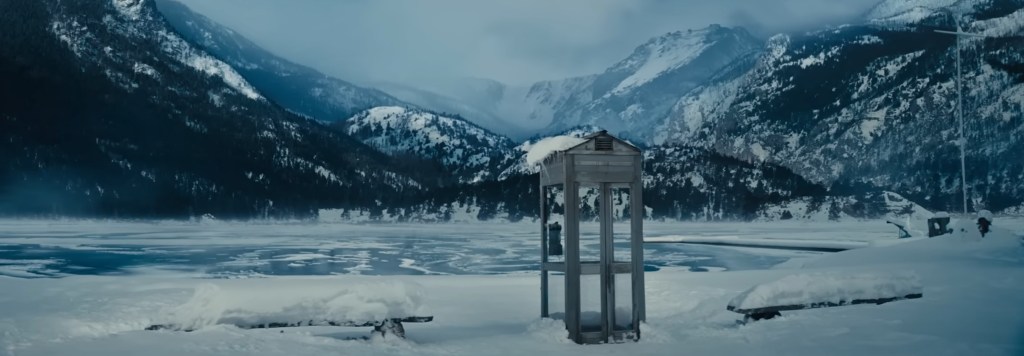
So, to set the scene, it has been four years since the events of The Black Phone, when The Grabber (Ethan Hawke) kidnapped Finney Blake (Mason Thames). However, with help from his sister Gwen (Madeleine McGraw) and the ghosts of those who had been killed, Finney managed not only to escape but also to kill The Grabber. Finney has been struggling to find himself in a world where everyone knows of his trauma. However, when Gwen starts dreaming again, connecting in her sleep with their long-dead mother Hope (Anna Lore), the siblings, along with Ernesto (Miguel Mora), make their way up to Alpine Lake Camp, a Christian youth camp, to find out why the connection is being made. But when they get trapped there in a blizzard, they discover that death might not be the end for those who have haunted them in the past.
Positives
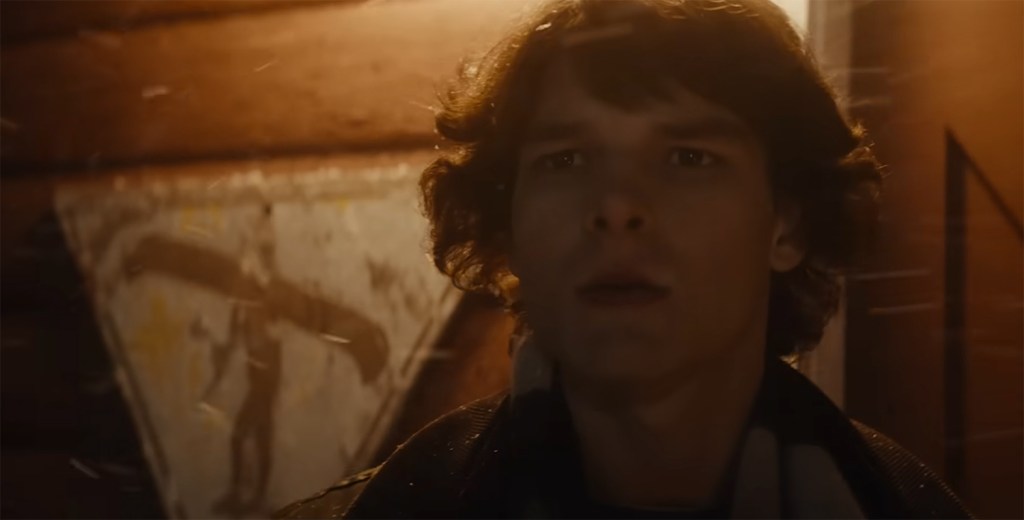
While there was a lot that ended up frustrating me with this film, there was also a lot of promise that kept me engaged throughout. Firstly, the setting of the Alpine Lake Camp is stunning, and it has a level of detail that gives you a glimpse into its many years of work. It is also filled with many locations where you can see the coming calamity, which offers the right amount of tension. Also, I liked conceptually the idea of an alive villain from the last film, being the new antagonist in the second film as a phantom or poltergeist, or whatever he is meant to be. While it was a bit heavy-handed, the differentiation between the dream-world and the real-world does effectively land, especially as the boundary between those two worlds starts to dissipate. In these moments, the film comes alive, and it is almost worth the price of admission just for the crescendo of calamity. Indeed, a lot of the cinematography and action design should be championed here, and I’d have explored this further if the rest of the film had held up.
Negatives
Unfortunately, while I do feel that the film stuck the landing, it was a long slog to get there. You must get through multiple scenes of children getting dismembered repeatedly, which tonally holds the film back in a way the original was not burdened by. The film is also trying to explore multiple different themes, from trauma to the 1980s, to survival, to abuse, to Christian theology, to dream therapy, and even a little mythology sprinkled around the place. It would be difficult for any film to try to balance all of those different thematic impulses in the creative process. Indeed, it feels at times like we are playing thematic whack-a-mole, which comes off as shallow.
Many of my fellow reviewers were put off by the Christian symbolism that suddenly appeared in the film after being mostly absent in the first. That was not my issue; my issue was they didn’t commit enough to the bit. So, when it does appear, it feels like a weird insert into the film, rather than an actual exploration of the competing theological narratives the film is exploring. Thus, characters become caricatures or worse, and nearly every line of dialogue becomes forced. All of this is not helped by the choice to revisit The Grabber, who has diminishing returns as the mask lacks the same impact.
Conclusion
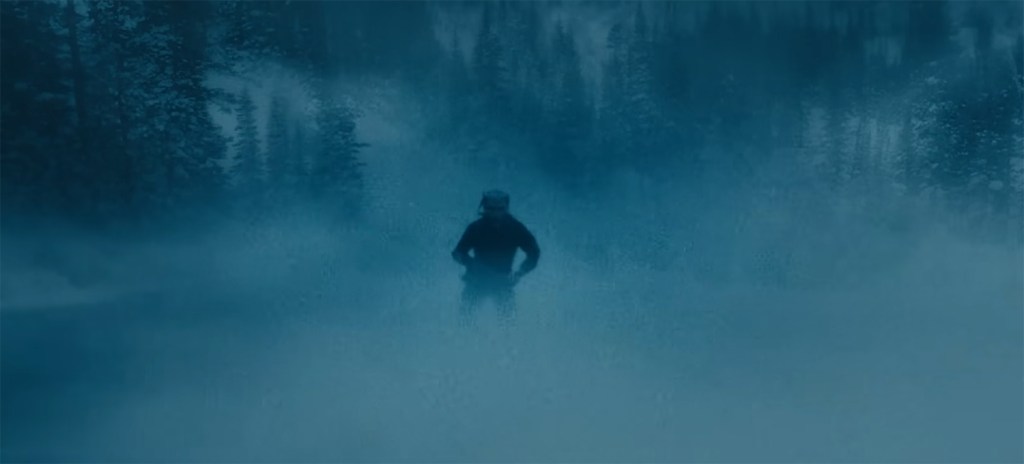
In the end, do we recommend Black Phone 2? Unfortunately, I am not sure that I can. While the film comes together in the end with a crescendo of calamity, it is such a slog to get to that point that I am not sure it is worth it. Have you watched Black Phone 2? Let us know what you thought in the comments below. If you liked Black Phone 2, we would recommend The Invisible Man, as it shows just what you can do with a killer that people can’t see.
By Brian MacNamara: You can follow Brian on Bluesky at @Tldrmovrev, when he’s not chatting about Movies and TV, he’ll be talking about International Relations, or the Solar System.
Feel free to share this review on social media and check out all our past reviews and articles Here, and have a happy day.
Credits – All images were created by the cast, crew, and production companies of Black Phone 2
Directed by – Scott Derrickson
Screenplay by – Scott Derrickson & C. Robert Cargill
Based on – “The Black Phone” by Joe Hill in 20th Century Ghosts
Music by – Atticus Derrickson
Cinematography by – Pär M. Ekberg
Edited by – Louise Ford
Production/Distribution Companies – Blumhouse Productions, Crooked Highway & Universal Pictures
Starring – Mason Thames, Madeleine McGraw, Ethan Hawke, Demián Bichir, Jeremy Davies, Miguel Mora, Arianna Rivas, Anna Lore, Graham Abbey, Maev Beaty, Simon Webster, Jacob Moran & Chase B. Robertson
Rating – Australia: MA15+; Canada: 14A; Germany: 16; New Zealand: R; United Kingdom: 18; United States: R
 TL;DR Movie Reviews and Analysis