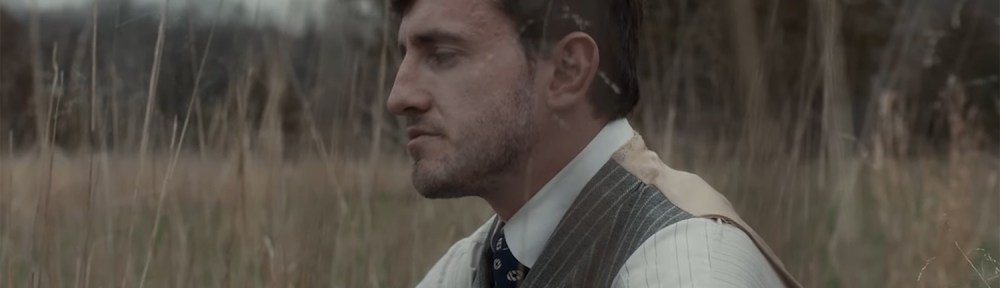
TL;DR – It is both profoundly moving and also downright frustrating. The visual construction was some of the best all year, yet it pondered along, afraid to commit to what its thesis statement was.
Post-Credit Scene – There is no post-credit scene.
Disclosure – I was invited to a press screening of this film.
Warning – Contains scenes that may cause distress.
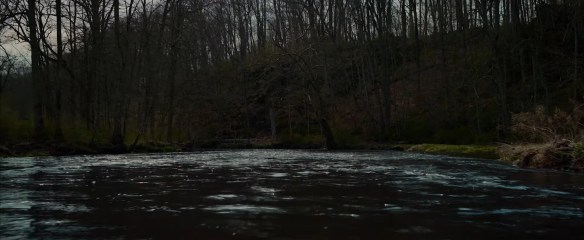
The History of Sound Review Introduction –
Today, we are looking at a film that existed in a state of dissonance for me, from the heights of beauty that you see throughout, to the despair of frustration. Some of this dissonance is purposely built into the film, an intentional conversation in subtext. However, while that is important, you can’t forget the actual text.
So, to set the scene, Lionel Worthing (Paul Mescal) has always had a special relationship with music since he was a child, able to feel it, see it, and manipulate it. It was this gift that took him in 1917 from the rural farm in Kentucky where he grew up to the Boston Conservatory to study music. It is here that he came across fellow student and composer, David White (Josh O’Connor). They had an instant bond, but war broke out, and David was drafted. David returned in 1919 and asked Lionel to join him on a trip collecting and recording folk songs, a trip that would have a marked impact on both their lives.
Beauty
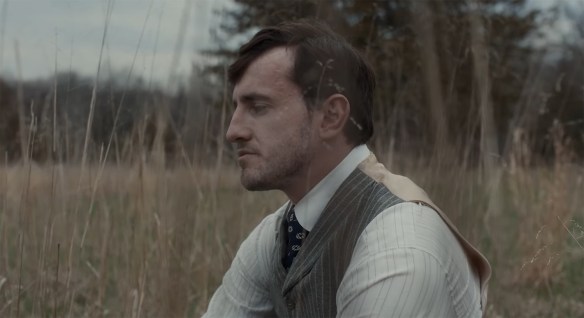
There are a lot of ways that beauty is shown throughout the film, and one of those is in the staging. It doesn’t matter if you are sitting in a barren field in Kentucky or running into a verdant field in Maine; the film finds a way to connect you with the landscape. There are times when that connection is used to hit you with the harshness of it all, others time it is there as an emotional cushion to help you process it all. You can see this beauty in the way the film works in the space of folk songs. There is a genuine reverence to the form, the songs we sing around bonfires to help make sense of the world around us. That respect is essential for the entire film to work.
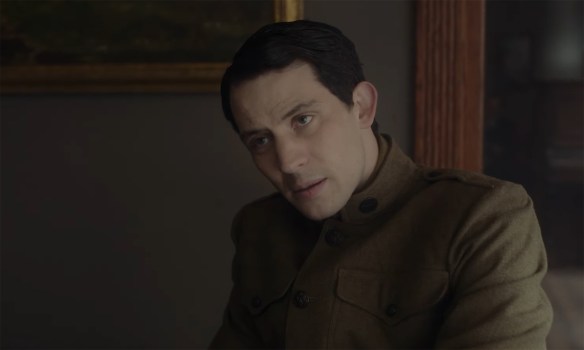
It also helps that the cast is there for everything the film is ready to throw at them. So much of this film is spoken non-verbally. Where what is not said is just as important as or more important than what was said. For any of that to work as well as it did here, you need to have a cast that can speak volumes through their eyes. I have yet to see a film that Josh O’Connor didn’t nail, and this is no exception. There are always layers to everything he is saying, and you see it in the way he holds himself, those subtle inflections. Paul Mescal has to do a lot of work as the anchor for the narrative, and it is his performance that helps guide how you connect with the film.
Frustration
While there was a lot about the film I adored, there was also one core component that profoundly frustrated me, and that was the way it revealed its thesis statement. So much about this film can be found in the subtext and not the text. There are conversations where the text is polite, but the subtext is steeped in disdain. There are parts in the film, like a discussion over a kitchen table, that are captivating. However, this desire to keep everything to the margins impacts the pacing and flow of the film, especially in the plodding second act. I found myself disconnecting with the story and characters as the film progressed, and never truly reconnected until the coda. It feels like a film that will work better on a second watch. Now you know what the thesis statement is from the end coda, but I am not sure if I have the strength to sit through it again.
Recommendation
In the end, do we recommend The History of Sound? Yes, but I think I would only recommend it to a very specific audience. One that will be happy to explore the time period, its exploration of music, and the other themes it delves into. At the same time, knowing that the emotional resonance is not going to hit until the very end of the film.
Have you watched The History of Sound? Let us know what you thought in the comments below. If you liked The History of Sound, we would recommend God’s Own Country to you because it explores love in the brutal light of the frontier.
By Brian MacNamara: You can follow Brian on Bluesky at @Tldrmovrev, when he’s not chatting about Movies and TV, he’ll be talking about International Relations, or the Solar System.
Feel free to share this review on social media and check out all our past reviews and articles Here, and have a happy day.
Credits – All images were created by the cast, crew, and production companies of The History of Sound
Directed by – Oliver Hermanus
Screenplay by – Ben Shattuck
Based on – The History of Sound by Ben Shattuck
Music by – Oliver Coates
Cinematography by – Alexander Dynan
Edited by – Chris Wyatt
Production/Distribution Companies – Closer Media, Film4, Tango Entertainment, Storm City Films, End Cue, Fat City, Focus Features & Universal Pictures
Starring – Paul Mescal, Josh O’Connor, Chris Cooper, Leo Cocovinis, Molly Price, Raphael Sbarge, Hadley Robinson, Emma Canning, Emily Bergl, Briana Middleton, Gary Raymond, Tom Nelis & Michael Schantz
Rating – Australia: M; Canada: 14A; Germany: na; New Zealand: M; United Kingdom: 15; United States: R
 TL;DR Movie Reviews and Analysis
Pingback: The Works of 2025 That Emotionally Wrecked Us | TL;DR Movie Reviews and Analysis