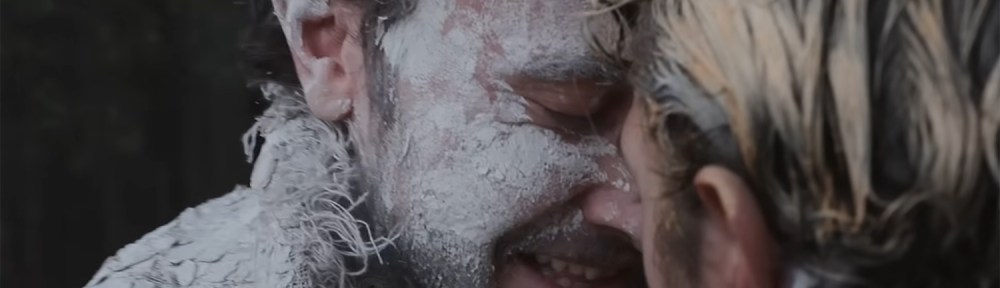
TL;DR – This film emotionally wrecked me. It’s raw to the bone and yet also one of the most cathartic works of cinema I have ever witnessed. Full of unbelievable pain and yet also moments of absolute joy. It exists as both a stunningly beautiful work of art and a profoundly haunting treatise on trauma.
Post-Credit Scene – There is no post-credit scene.
Disclosure – I was invited to a press screening of this film.
Warning – Contains scenes which may cause distress.

Hamnet Review Introduction –
Okay … phew … deep breath … I can do this. In my time, I have watched a lot of films that have made me emotional in the cinema. Indeed, including at least one time when I ugly cried so much the old lady sitting next to me asked if I was okay, oh, and that time when Pixar made us think they were going to kill all the toys in the furnace, I have still not forgiven you for that, Pixar. However, I have never experienced emotions quite the same way as I sat down to watch Hamnet, a film steeped in both beauty and trauma.
So, to set the scene, we are in a small town in Elizabethan England, where, while tutoring some boys in Latin, a young William (Paul Mescal) sees an enigma walk out of the forest. Agnes (Jessie Buckley) is nothing like any of the other women he has met, understanding the ways of bees, knowing the curative power of herbs, and being the master of birds of prey. It is the combination of traits that makes the town whisper unseemly things behind your back. But when an expedited wedding is needed, a new complicated family is born. But life can be hard in this era, and you never know when it will sneak up on you, no matter how well you prepare.

Beauty
The first thing I want to champion about this film is just how beautiful it is. I am not speaking in hyperbole when I say that the opening frame of the dappled light through the trees, slightly overexposed to highlight every different shade of green, might be one of the most beautiful moments I have ever seen in cinema. That is even before the weight of symbolism and narrative falls upon it to give it even more context. Films set in Elizabethan times can tend towards dourness, and I would be lying if I said there was none of that here. However, we always see creative uses of colour, set pieces of nature, and an attention to detail that captivates you. It is one of the ways the film captures your attention and prepares you for the emotional onslaught.
Casting
One of the delights of this film is how perfect the casting is, with every role being fit-for-purpose in what was a difficult film to articulate emotionally. With that in mind, I first want to champion Jacobi Jupe, Olivia Lynes, and Bodhi Rae Breathnach. This would have been a difficult film in places for adults to get the emotional resonance correct, but those young actors not only stepped up to the plate, but they also punched out home runs. I also need to say that casting Noah Jupe for the third act was inspired; he is the focal point of the film’s crescendo, and he takes it in his stride. Jessie Buckley and Paul Mescal are, of course, forces of nature as they anchor the narrative in their love and grief. However, every small role in this film lands on its feet. Joe Alwyn was always a delight when he turned up, and Emily Watson shows why she has been nominated for Oscars and the Olivier Award in every moment.
Production
If there is one word I would use to sum up this film, it would be “intentionality” because you can see all these deliberate touches, no matter which scene you are watching. Hamnet is a film that has such strength in its convictions that it will have characters move out of frame, and it will continue the scene as if it were a play, and people are talking in the wings. It is a deliberate choice that brings the audience deeper into the story, almost like a visual manifestation of someone whispering, so you must lean in to hear what they are saying. All the houses and costumes, and well, all the small details build a world and time that captivates you in. Being able to move through all these spaces helps sell you on living in a house with its ebbs and flows. Max Richter’s musical score resonated in me in a way I don’t think has happened since The Leftovers, knowing when to be gentle and when to slap you in the face. Indeed, this is the best use of On the Nature of Daylight since Arrival. The third act also shows you the power of editing to convey emotional narratives, as it helps guide you to feel what the characters are feeling.

Complexity
Many movies aim for emotional simplicity with their storytelling because, understandably, it is an easier way to connect with the audience. But as Inside/Out famously demonstrated, having the ability to contextualise complex, intertwined, and sometimes competing emotions is a barometer of maturity. This is no different in cinema. A good example of this is William’s mother, Mary (Emily Watson). William has a problematic relationship with his parents, thanks to the abuse he receives from his father, John (David Wilmot). In this way, Mary is positioned initially as an antagonist in some respects for Agnes, especially when William moves to London. However, Mary and Agnes come from different worlds, which means they clash at times when their world views collide, but also, they find great sources of strength when those forces align. Mary is not an antagonist, in the same way that William or disease are not antagonists; they are parts of nature working to their own rhythms.
Love
Of the many emotions you will experience throughout the film, the one the narrative is clearly grounded in is love. Love is embedded in every moment of Hamnet, even in the moments of grief, especially in the moments of despair. There are those moments at the start when William courts Agnes with the story of Orpheus and Eurydice, and if they sound familiar, then you may have played Hades. There are difficult moments when Agnes loves William so much that she knows he has to leave the family and go to London. There is the love that will stand resolute, even in the face of death, and the love so powerful that the grief it produces echoes from the rooftops. But we also see all the facets of love play out in this movie, from the romantic love and William and Agnes, the parental love Agnes has for her children, and even the familial love that Agnes’ brother Bartholomew (Joe Alwyn) has for her.

Grief and Catharsis
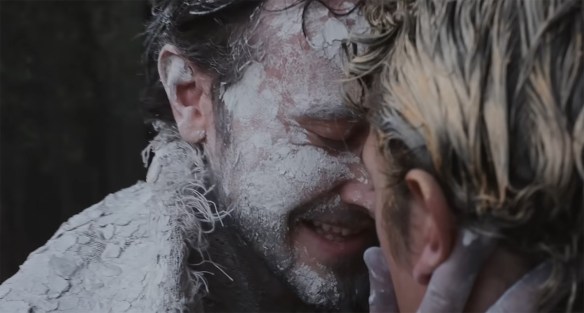
Before we finish, I do want to talk a bit about how the film explores grief and catharsis, but that means talking about the third act of the film. So, as there will be [SPOILERS] in this section, please skip through to the end if you have not seen the movie yet. Throughout the film, Hamnet emotionally prepares you for the tumultuous grief that it will explore. Life in Elizabethan times was sometimes a brutal affair, no matter how much you loved or how much you tried. There is an emotional journey that Paul Mescal has to go on in the space of thirty seconds that devastated me on a foundational level. The fear he missed saying goodbye to a child, the joyous relief to find a miracle, then the profound gut punch that follows. Lifting high only to have the legs cut out from underneath you. Indeed, this is a film that does not coddle you about the realities of death; it can be brutal and unforgiving. A pain that cuts to your core. A pain that makes writing about it hard as tears roll down my face, even now, after all this time.
However, there are a lot of films out there that explore the emotional components of grief, its immobilising power, how it numbs your soul and rips people apart. Grief is isolating, it is pervasive, and it infects every part of life. Few honestly explore that catharsis that can be out there. It might be because it usually comes off as feeling cheap, but not here, in Hamnet, the catharsis is earned. While this is a film about William Shakespeare, and he is one of the leading players, the core of the film is Agnes. Her journey bringing life into this world, only to see it cut down. The anger and frustration at her husband for his inability to feel as she feels.
These feelings are only escalated when she discovers that her husband’s next play is named after her loss. Every part of that final act scene in The Globe Theatre had to be perfect for the ripples of the narrative to reach their needed resolution. There are so many different emotions being unravelled and recontextualised in this moment. Anger, grief, frustration, loss, numbness, horror, pain, joy, acceptance, and most importantly, catharsis. You see the layers of the film come to fruition in those moments, as Agnes processes what she is witnessing. A personal revelation in a room full of people who do not understand how personal it is. A stark juxtaposition that highlights many of the film’s themes. In my time exploring cinema, I have never felt an emotional resolution like this, and I am not sure I ever will again.
Recommendation
In the end, do we recommend Hamnet? To be honest, if you have young children, then I don’t think I can recommend this to you because I think the trauma the film explores could be too raw for you. It is also a profoundly difficult film to watch at times. I don’t think there was a single dry eye in the cinema when I watched it. The muffled sobs echoing in the quiet parts [mostly from me]. However, this was an experience like no other I have witnessed, a wall of emotions I have never felt before, and a time that I likely will never forget. For viewers with the capacity to sit with its emotional weight, Hamnet is one of the most profound cinematic experiences of the year. A collaborative work of artists at every level giving their all.
Have you watched Hamnet? Let us know what you thought in the comments below. If you liked Hamnet, we would recommend Touch, The Mountain, Aftersun, Babyteeth or After Yang as they all explore the emotional complexities of grief in unique ways that will leave a mark.
By Brian MacNamara: You can follow Brian on Bluesky at @Tldrmovrev, when he’s not chatting about Movies and TV, he’ll be talking about International Relations, or the Solar System.
Feel free to share this review on social media and check out all our past reviews and articles Here, and have a happy day.
Credits – All images were created by the cast, crew, and production companies of Hamnet
Directed by – Chloé Zhao
Screenplay by – Chloé Zhao & Maggie O’Farrell
Based on – Hamnet by Maggie O’Farrell
Music by – Max Richter
Cinematography by – Łukasz Żal
Edited by – Chloé Zhao & Affonso Gonçalves
Production/Distribution Companies – Hera Pictures, Neal Street Productions, Amblin Entertainment, Book of Shadows, Focus Features & Universal Pictures
Starring – Jessie Buckley, Paul Mescal, Emily Watson, Joe Alwyn, Jacobi Jupe, David Wilmot, Olivia Lynes, Bodhi Rae Breathnach, Freya Hannan-Mills, Dainton Anderson, Elliot Baxter, Noah Jupe, El Simons, Louisa Harland, Jack Shalloo, Sam Woolf & Hera Gibson
Rating – Australia: M; Canada: PG; Germany: na; New Zealand: na; United Kingdom: 12A; United States: PG-13
 TL;DR Movie Reviews and Analysis
Pingback: The Works of 2025 That Emotionally Wrecked Us | TL;DR Movie Reviews and Analysis
Pingback: “Wuthering Heights” (2026) – Movie Review | TL;DR Movie Reviews and Analysis
thank you for your excellent review, which reflects exactly how I felt watching this movie.
LikeLiked by 1 person
Pingback: The Bride! – Movie Review | TL;DR Movie Reviews and Analysis