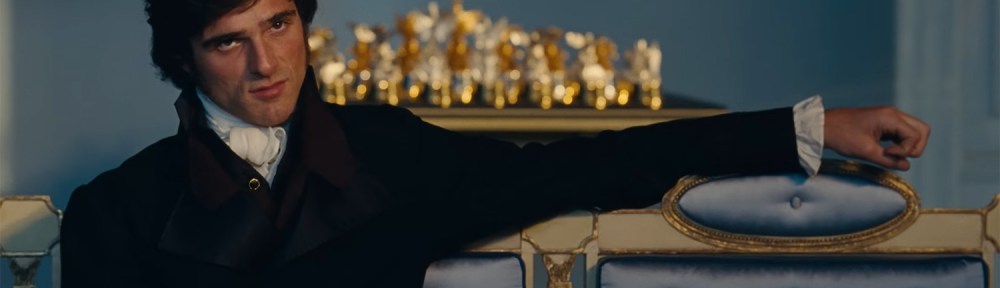
TL;DR – I truly do not know who this film is for. It is an unpleasant experience for those who have never read the novel, and changes so much from the source material that it would be alienating for those who loved it.
Post-Credit Scene – There is no post-credit scene.
Disclosure – I was invited to a press screening of this film.
Warning – This film contains scenes which may cause distress.
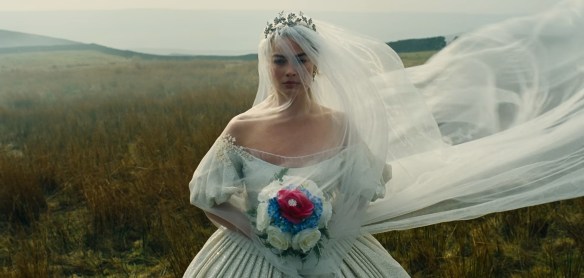
Wuthering Heights Review Introduction –
Okay, I feel like this is one of those films where I need to clarify where I am coming from here. When I was growing up, there were a number of classics on the curriculum, but my school didn’t dive into the works of the Brontë sisters. So, it didn’t form a strong bond with me when I was young. Now, don’t get me wrong, I do not dismiss those who did form a bond because if someone did a film of Dinotopia and botched it, I would also be mad. However, I’m coming into this film without those built-up expectations, for better or worse. [Editor’s Note: It would not have helped either way]
So, to set the scene, Cathy (Charlotte Mellington) is the only daughter of a drunkard fool, Mr Earnshaw (Martin Clunes), who once owned considerable land and prestige but has both figuratively and metaphorically pissed all that away through gambling debts. Cathy has one companion, Nelly (Vy Nguyen), who is, retrospectively, more of a paid lady-in-waiting than a friend. But her life changes when her father brings a boy home, who is given the name Heathcliff (Owen Cooper). They become a fast pair in a land of isolation. But years later, the adult [and probably too old for the source material] Cathy (Margot Robbie) is joyous to hear that they finally have a new neighbour, Edgar Linton (Shazad Latif). While Nelly (Hong Chau) advises against it, and Heathcliff (Jacob Elordi) clearly does not want her to go, Cathy goes to visit the new family, but one sprained ankle changes everyone’s lives.
The Good
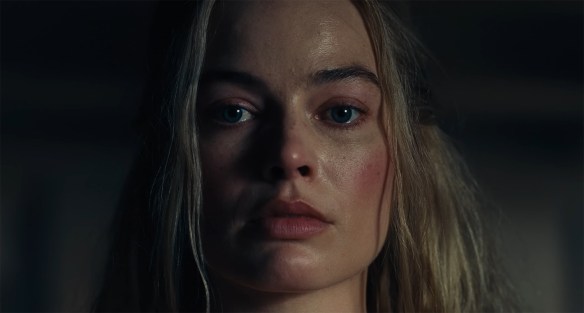
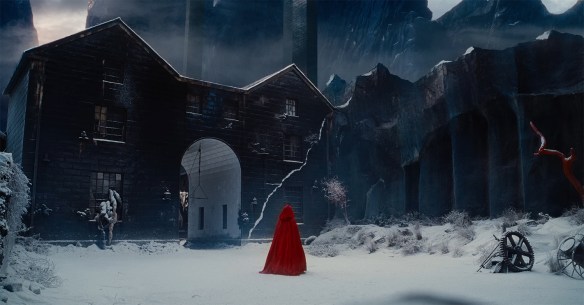
While the film often felt like a mess, there were moments of genuine interest scattered throughout the mosaic of frustration. To begin with, Linus Sandgren clearly has a good eye because there are shots in this film that are just stunning. While I know some people are upset with the costumes not being of the period, it is not the film’s biggest issue, and some of the outfits are stunning. However, it does help when you have a cast like this wearing them. From a structural perspective, I quite liked the first act, and I think the young actors really held their own in that space. Anthony Willis is scoring the heck out of this film, and that helped get me through the back half of the film. I would also say that while I have issues with the characters in this film, I did feel that the actors were giving their all with the subject material, and there were some amusingly surreal moments that did get a laugh out of the audience.
The Bad
I personally struggled with the pacing of the film, most notably in the third act, where something felt missing or drawn out. To check this, I consulted with my friend who did read the book, and I believe owns five copies of it, and discovered that this film only covers a portion of the original work, and that several characters and plot points are missing in the film. This is also not a Dune situation when we can expect a Part Two at some point. Thus, you feel that a lot of this film is window dressing, trying to spackle over holes in the plot. Then we come to the style, this is a very stylish film, but it is also a film rooted in the time when it was written. Unfortunately, unlike say A Knight’s Tale, where this juxtaposition helped the work. Here, you can feel the style and the time period actively fighting each other for dominance, and it becomes a real distraction to the narrative. For example, the Charli XCX songs are fine in isolation, but didn’t work in the context of the film, and pull you out of what is already in a perilously tenuous state.
The Ugly
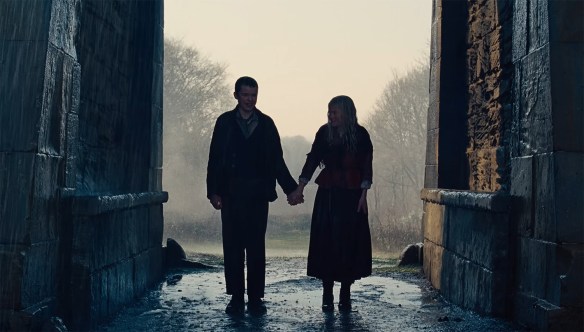
Now we come to the parts of the film that made me write angry notes in my notebook during the screening. The first being that by somewhere through the second act, I found I actively despised just about every character in this movie. I did not care for their brooding, their furrowed stares, their manipulations, nor indeed their wants and desires. Once I disconnected from everyone [not you, Shazad Latif, you were fine] the film’s increasingly over-the-top presentation began to actively grate. For example, I would usually get upset with the person in front of me who was constantly taking out their phone to check the time, but here it gave me a chance to see how much more I had to sit through.
But then we must talk about the things in this film that I actively loathed, which I have been advised mostly come from this new adaptation, but not all the issues. I do feel to a certain extent that when you sit down to watch an Emerald Fennell film, you should expect a level of uncomfortableness as the narrative proceeds. But there is a fine line between uncomfortableness and unpleasantness. For me, her last work, Saltburn, got that distinction right, Wuthering Heights not so much. The need to over-sexualise every aspect of life in order to create an escalating parade of provocative insert shots, from kneading dough -> fingering broken eggs -> watching a snail on glass. Look, it doesn’t bring anything to the table. Also, I think that was unfair to the snail, who was an innocent bystander.
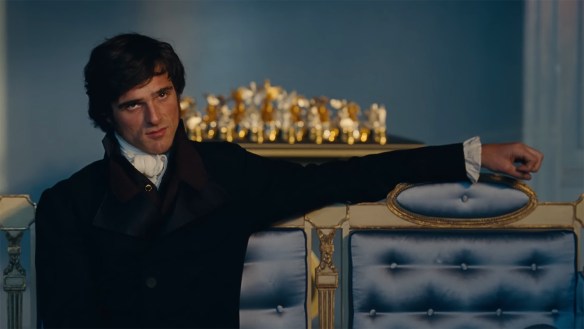
What’s worse is that in places the film fetishises abuse in a way that I personally find repugnant. The sexualization of abuse is played in the same tone as the rest of the over-stylised-suggestive moments and at no point does the film fully address this. Then there are the narrative changes that cause a pause. It is hard to explain this as it comes in the third act, but for those who have read the books: they change a character to give them more agency in their abuse. However, it is not an empowering change when you feel that the only motivation for this change is to soften the brooding antagonist abuser that we are meant to swoon for. The abuser whose comeuppance is removed from this film because it ignores the second half of the book. This is but one example of the active awfulness that is this film at times.
The ending crystallises the film’s core problem, where the musical score is going all out, demanding that you have an emotional response to what is happening on screen. However, I felt nothing; I was numb to it all, because I actively despised all that was happening. There has been a lot said recently about how some films cheat by using music to emotionally manipulate a response out of the audience. Well, I can tell you this is not the case in reality because Anthony Willis was bringing every emotional technique in his tool chest to try and evoke emotions out of you, and I am on record as to openly weeping in a cinema on multiple occasions, and yet nothing, not a tear, not a feeling, not a single care about anything that was happening.
Recommendation
In the end, do we recommend Wuthering Heights? Unfortunately, not. The first act is a strong foundation, and there are some solid practical elements to the movie. The more the narrative progressed, the more I found myself disconnecting from the proceedings, and worse, actively hating the characters and setting. I can’t recommend this film if you have never read the books, and I very much cannot recommend this for people who loved the original work. There’s probably a good reason they put Wuthering Heights in quotation marks.
Have you watched Wuthering Heights? Let us know what you thought in the comments below. If you liked Wuthering Heights, we would recommend Emma to you because it also is trying to bring a modern spin on a classical work from this era (yes I know one is from the romantic era and the other is from the regency era, but they are close enough) that gets that balance right in interesting ways.
By Brian MacNamara: You can follow Brian on Bluesky at @Tldrmovrev, when he’s not chatting about Movies and TV, he’ll be talking about International Relations, or the Solar System.
Feel free to share this review on social media and check out all our past reviews and articles Here, and have a happy day.
Credits – All images were created by the cast, crew, and production companies of Wuthering Heights
Directed by – Emerald Fennell
Screenplay by – Emerald Fennell
Based on – Wuthering Heights by Emily Brontë
Music and Songs by – Anthony Willis & Charli XCX
Cinematography by – Linus Sandgren
Edited by – Victoria Boydell
Production/Distribution Companies – MRC, Lie Still, LuckyChap Entertainment, Universal Pictures & Warner Bros Pictures.
Starring – Margot Robbie, Jacob Elordi, Hong Chau, Shazad Latif, Alison Oliver, Martin Clunes, & Ewan Mitchell
With – Amy Morgan, Jessica Knappett, Millie Kent, Vicki Pepperdine, Charlotte Mellington, Owen Cooper & Vy Nguyen
Rating – Australia: M; Canada: 14a; Germany: na; New Zealand: M; United Kingdom: 15; United States: R
 TL;DR Movie Reviews and Analysis
I went to see it yesterday and had mixed feelings. I found it very dark in places and joyous in others. For me the film was over long. The cinematography was stunning and I liked the acting.
Would I go and see it again or watch it when it comes on TV, probably not.
LikeLike